Before the Signature: A Boardroom Stress Test for Cloud and AI Suppliers

Photo: UK boardroom directors reviewing cloud computing contract documents, via s3.amazonaws.com
UK boards are no longer merely approving technology purchases. They are approving dependencies. A cloud platform may hold the customer database, a SaaS tool may process payroll, and an AI assistant may ingest contracts, emails and personal data. When those services fail or are breached, the organisation remains accountable — to regulators, customers and, increasingly, its insurers.
The difficulty is that supplier assurances are often presented as a familiar set of logos, certificates and contractual promises. Directors do not need to become security engineers to challenge them. They do need a consistent way to ask whether the contract reflects the risk the business is accepting. The Blue-Hat Test is a practical boardroom stress test: five questions that can be put to management and suppliers before signature, and revisited at renewal.
Why the contract is now a board document
A contract does not transfer risk. It allocates responsibility, sets expectations and creates evidence. That evidence matters when a cyber insurer assesses a claim, when a regulator asks how personal data was protected, or when a customer wants assurance that its information is not sitting in an unknown jurisdiction.
Under UK GDPR, controllers must use processors that provide sufficient guarantees and must have a written contract covering key obligations. The board does not need to read every schedule, but it should receive a clear summary of where the supplier sits in the data chain, what happens if something goes wrong, and how the organisation can exit without losing control of its information.
Question one: Where does our data sit, and who can move it?
Ask for a plain-English map of data location and access. Which countries store or support the service? Which suppliers and subcontractors can access the data? Does the agreement permit transfers outside the UK, and under what mechanism? For AI services, ask a further question: is our data used to train models, and can that use be switched off contractually and technically?
Data residency is not a binary UK-versus-overseas issue. A supplier may store data in the UK while providing support from another country. The board should understand the practical access route, not just the headline hosting location.
Question two: How will we be told about a breach — and who does the telling?
The UK GDPR clock does not start when the supplier finishes its investigation. It starts when the controller becomes aware. Contracts should define how quickly a supplier must notify the organisation, what information it must provide, and how it will cooperate with regulatory and customer communications.
Directors should ask for the notification timeline in hours, not aspirations. They should also ask who bears the cost of forensic investigation, legal advice, credit monitoring or customer communications. A supplier that promises to "cooperate" without defining how, when and at whose expense is offering comfort rather than control.
Question three: Which sub-processors are in the chain, and how do we control changes?
Modern cloud services rely on layers of suppliers. The board should see the material sub-processors, understand what each one does, and know how changes are notified. Is there a right to object? Are new sub-processors subject to equivalent security terms? Can the organisation audit the chain, or must it rely on the prime contractor's assurances?
This is not an argument for unlimited supplier sprawl. It is an argument for visibility. A short, maintained list of critical fourth parties is more useful than a contractual promise that no one has tested.
Question four: Can we leave without losing the evidence?
Exit rights are a security control. Ask how data will be returned, in what format, and within what period. Ask how deletion will be verified. Ask whether the organisation can continue to operate during transition, and whether any escrow or continuity arrangement exists for business-critical services.
For insurance and incident response purposes, the ability to retrieve logs and records is particularly important. A supplier that cannot provide evidence of who accessed what, and when, may leave the organisation unable to assess a breach or support a claim.
Question five: What proof of security testing exists — and when was it last challenged?
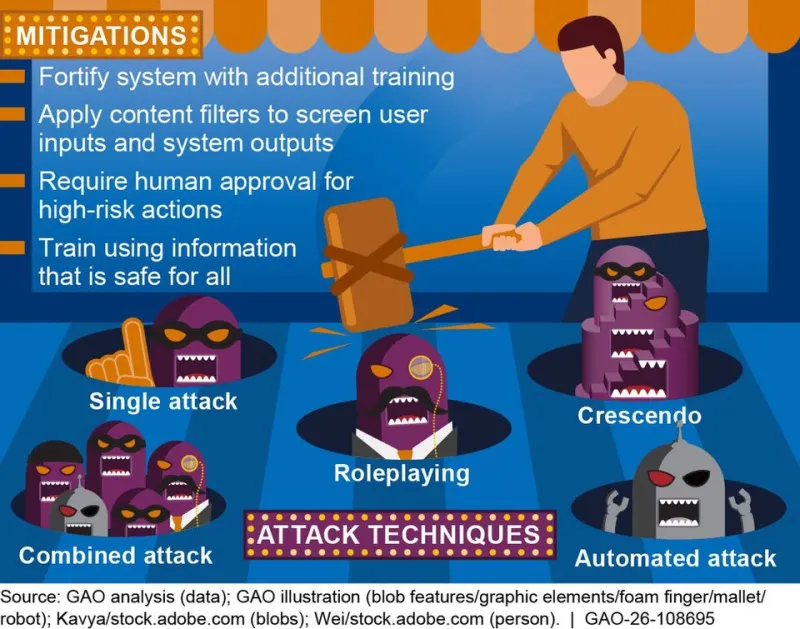
Certificates are useful, but they are not a substitute for scrutiny. Ask for the scope of any ISO 27001 certification or SOC 2 report, not just the logo. Ask when the last independent penetration test took place and whether critical findings were closed. For AI services, ask how the supplier tests for prompt injection, data leakage and unsafe output.
Directors should also ask what happens when testing reveals a problem. A supplier that can describe its remediation process, timescales and escalation route is more reassuring than one that presents a perfect record.
Turning answers into board assurance
Boards do not need to resolve every supplier question themselves. They need a repeatable method. Management can score each answer red, amber or green against the organisation's risk appetite, record any compensating controls, and set conditions before signature or renewal. Material suppliers should be added to the risk register with a named owner and a review date.
This discipline also supports cyber insurance discussions. Insurers increasingly want evidence of supplier oversight, incident notification arrangements and exit planning. A board that can show its Blue-Hat Test results, and the actions taken in response, is better placed to demonstrate that it is managing the risk rather than simply buying a service.
The test is deliberately proportionate. Not every contract requires the same depth of review. But where cloud or AI suppliers hold sensitive data or support critical operations, five clear questions asked early can prevent a signature that the board later regrets.